
In today’s fast-evolving industrial world, selecting the right manufacturing method can directly impact your business success. Whether you aim for precision, speed or cost-efficiency, your choice between CNC machining and traditional manufacturing is crucial.
So, which one is better?
The answer depends on your project needs, production scale and budget. Let’s break it down simply and practically.
What is CNC Machining?
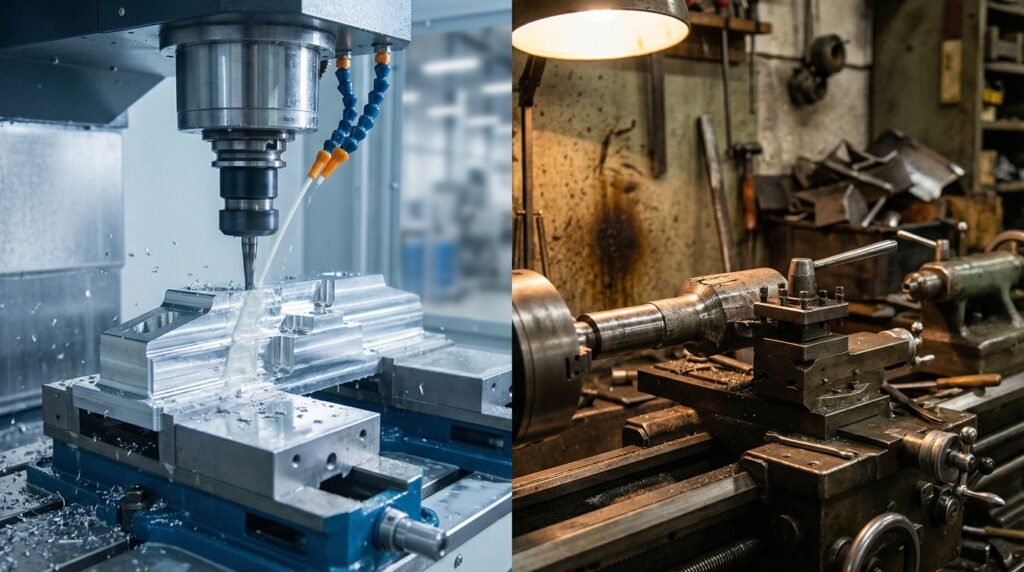
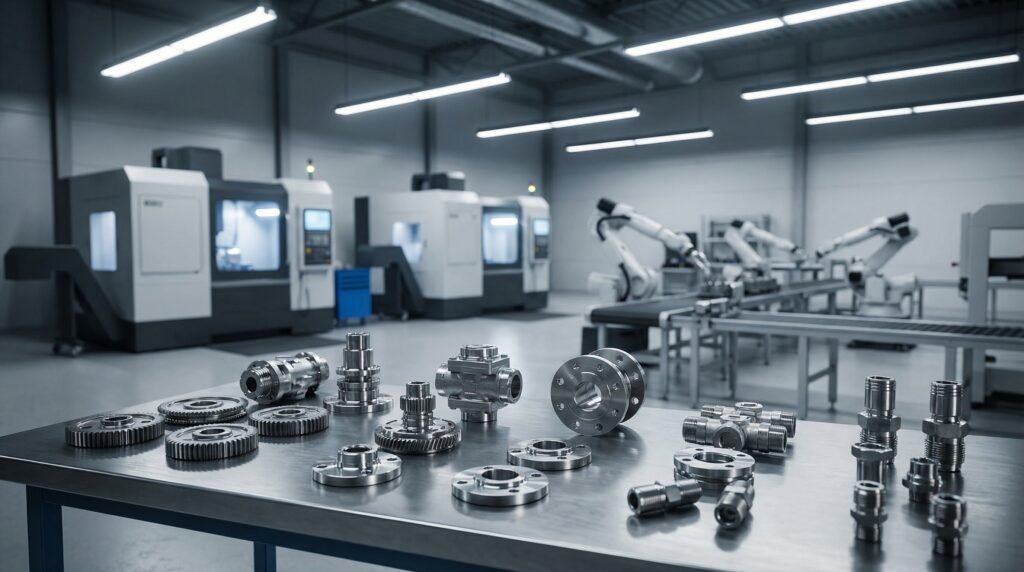
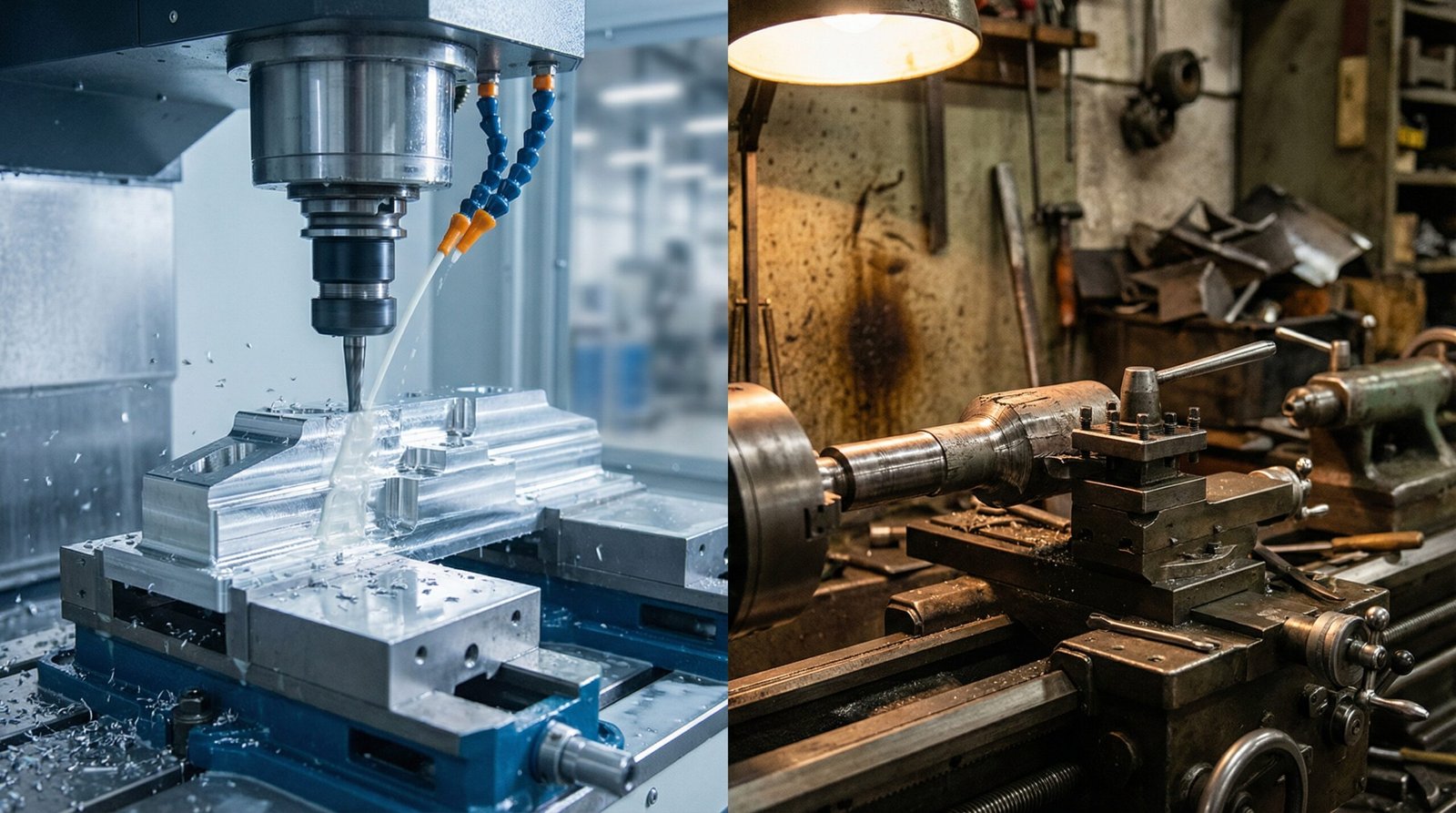
CNC (Computer Numerical Control) machining is a modern manufacturing process where machines are controlled by computer programs to produce highly accurate parts.
These machines follow pre-programmed instructions to cut, shape and form materials into precise components making them ideal for industries like:
- Aerospace
- Automotive
- Oil & Gas
- Medical manufacturing
Why CNC Machining is Popular
CNC machining is widely used because it offers:
- Exceptional precision and tight tolerances
- Consistent results in mass production
- Ability to create complex geometries
- Reduced human error through automation
Once a design is programmed, CNC machines can produce identical parts repeatedly without variation saving both time and cost.
What is Traditional Manufacturing?
Traditional manufacturing, also known as manual machining, involves skilled operators operating machines such as drills, lathes and milling machines.
This method relies heavily on human expertise and is still relevant in many industries, especially for:
- Small-scale production
- Custom repairs
- Simple component manufacturing
Why Traditional Methods Still Matter
Despite technological advancements, traditional manufacturing offers:
- Lower setup costs
- Flexibility for quick changes
- No need for complex programming
- Ideal for one-off or low-volume jobs
It remains a practical solution where automation is not necessary.
CNC Machining vs Traditional Manufacturing: Key Differences
Understanding the core differences helps businesses make smarter decisions.
1. Automation vs Manual Control
- CNC machining is fully automated and software-driven
- Traditional manufacturing depends on human operation.
2. Accuracy & Precision
- CNC machining delivers high precision and repeatability
- Manual methods rely on operator skill, which may vary.
3. Production Speed
- CNC machines operate continuously, ensuring faster production
- Manual processes take longer and require more effort.
4. Flexibility
- CNC allows quick design changes through software updates
- Traditional methods require manual adjustments, which can be slower.
Advantages of CNC Machining
CNC machining is ideal for modern industries due to its powerful benefits:
- High precision and consistent quality
- Faster production with reduced lead times
- Capability to produce complex designs
- Minimal human error
- Scalable for both small and large production runs
This makes it the preferred choice for businesses aiming for efficiency and innovation.
Advantages of Traditional Manufacturing
Traditional methods still provide value in specific scenarios:
- Cost-effective for small projects
- No need for advanced technology or programming
- Flexible for quick repairs and adjustments
- Suitable for low-volume production
For businesses with limited budgets, this approach can be a smart and practical option.
Which Manufacturing Method is Better?
There is no one-size-fits-all answer.
Choose CNC Machining if you need:
- High precision and tight tolerances
- Complex designs
- Large-scale production
- Faster turnaround times
Choose Traditional Manufacturing if you need:
- Simple parts or repairs
- Low production volume
- Lower initial investment
Best Strategy: Hybrid Approach
Many modern companies combine both methods to balance:
- Cost efficiency
- Flexibility
- Production speed
This hybrid approach ensures optimal results across different project types.
The Future of Manufacturing
The future is driven by automation, precision, and smart technology. CNC machining is becoming the industry standard for companies looking to stay competitive.
However, traditional manufacturing remains important where human expertise and adaptability are required.
Forward-thinking companies are now integrating both methods to maximize productivity and innovation.
Conclusion
Both CNC machining and traditional manufacturing have unique strengths.s.
- CNC machining stands out for precision, speed and scalability
- Traditional methods are best for simplicity, flexibility and cost control.
Knowing the differences helps you select the best solution for improved performance and growth.
FAQs
What is the main difference between CNC machining and traditional manufacturing?
CNC machining uses computer-controlled automation, while traditional manufacturing relies on manual operation by skilled workers.
Is CNC machining suitable for small projects?
Yes, but it is more cost-effective for medium to large production runs due to setup costs.
Which method is more accurate?
CNC machining offers greater accuracy and consistent results than manual methods.
When should I choose traditional manufacturing?
It is ideal for simple tasks, repairs, or low-volume production that require flexibility.
Can CNC and traditional methods be used together?
Yes, many businesses use a hybrid approach to balance efficiency, cost and customization.