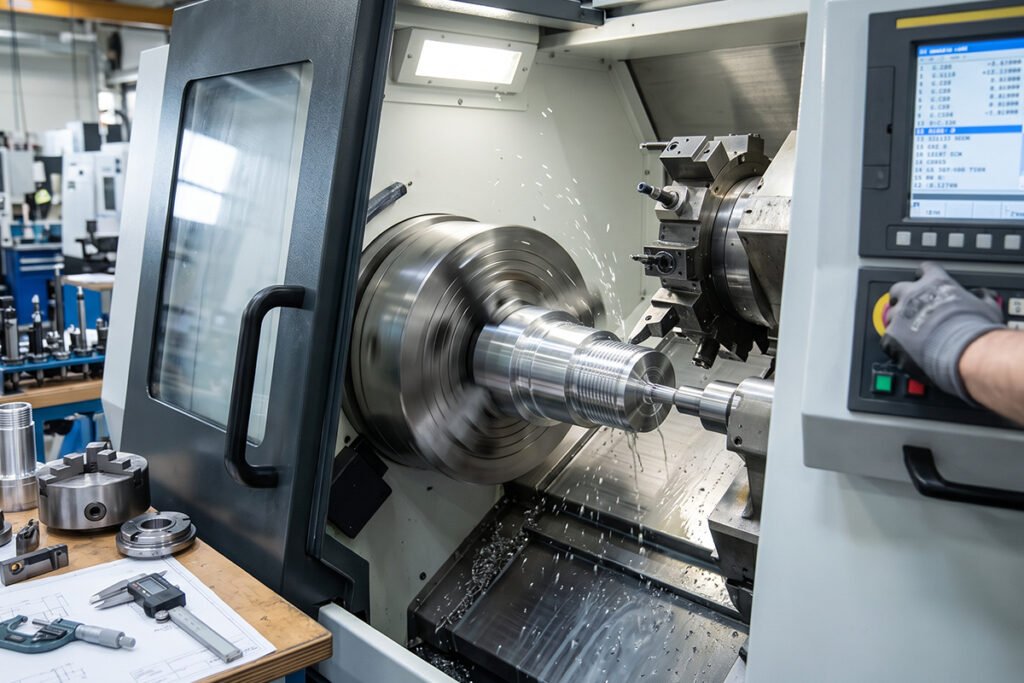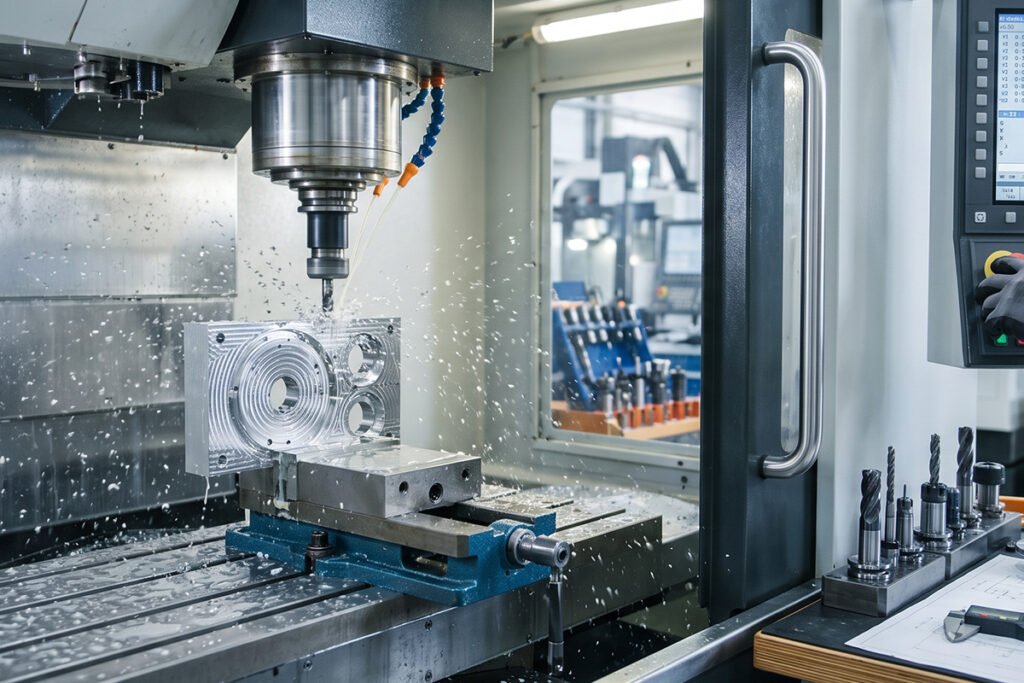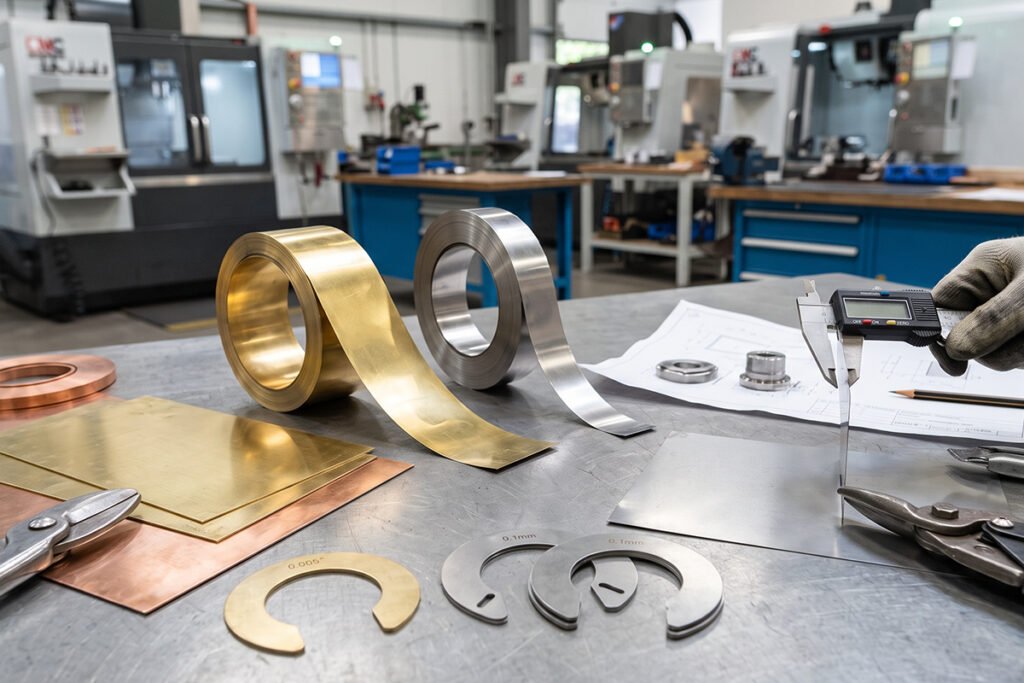

Not every custom part is best made with a standard CNC lathe or mill. Some geometries, materials, or tolerance requirements call for a different approach entirely, such as EDM, laser cutting, or waterjet cutting. Each of these processes has a distinct advantage, and picking the right one for your part can significantly affect cost, precision, and turnaround time.
Electrical Discharge Machining (EDM)
EDM removes material using controlled electrical sparks between an electrode and the workpiece, rather than physical cutting force. Because there’s no mechanical contact, EDM can machine extremely hard materials, including hardened tool steels and exotic alloys that would be difficult or impossible to cut conventionally.
There are two main types:
- Wire EDM uses a thin, electrically charged wire to cut intricate shapes, sharp internal corners, and fine details through a workpiece, similar to a very precise coping saw. It’s commonly used for making dies, molds, and parts with complex internal profiles.
- Sinker (die-sink) EDM uses a shaped electrode that’s pressed into the material to “sink” a cavity matching the electrode’s form, often used for creating detailed molds and cavities that would be difficult to machine with a rotating cutting tool.
Best suited for: hardened materials, extremely fine detail, sharp internal corners that a rotating tool can’t physically produce, and mold or die-making applications.
Trade-offs: EDM is generally slower and more expensive per part than conventional machining, and it only works on electrically conductive materials.
Laser Cutting
Laser cutting uses a focused, high-powered laser beam to melt, burn, or vaporize material along a precise path, typically used on flat sheet or plate stock. It’s fast, highly accurate for two-dimensional profiles, and produces a narrow, clean cut with minimal material distortion when set up correctly.
Best suited for: cutting flat sheet metal into precise 2D shapes, brackets, panels, gaskets, plates, especially when you need sharp detail, tight kerf width, and fast turnaround on relatively thin material.
Trade-offs: Laser cutting is generally limited to flatter, thinner materials. Very thick material slows the process significantly and can affect edge quality. It also introduces localized heat, which can slightly affect material properties near the cut edge (the heat-affected zone), a factor worth discussing with your supplier if the application is heat-sensitive.
Waterjet Cutting
Waterjet cutting uses a high-pressure stream of water, often mixed with an abrasive garnet material, to erode a path through the workpiece. Unlike laser cutting, it’s a cold-cutting process that generates no significant heat, which makes it a strong option for materials that are heat-sensitive or prone to warping.
Best suited for: thick materials, heat-sensitive metals and composites, and applications where you specifically need to avoid a heat-affected zone. Waterjet can also cut a much wider range of materials than laser, including stone, glass, and composites, in addition to metals.
Trade-offs: Waterjet cutting is generally slower than laser cutting, especially on thinner materials, and the cut edge can have a slightly rougher finish depending on cutting speed, which may require secondary finishing for tight-tolerance applications.
Comparing the Three at a Glance
| Factor | EDM | Laser Cutting | Waterjet Cutting |
| Best for | Hardened materials, fine detail, sharp internal corners | Flat sheet metal, fast 2D profiles | Thick or heat-sensitive materials |
| Heat impact | Localized, minimal | Yes (heat-affected zone) | None (cold cutting) |
| Material range | Conductive materials only | Mostly metals, moderate thickness | Very broad — metals, composites, stone, glass |
| Speed | Slower | Fast | Moderate to slow |
| Typical use case | Molds, dies, hardened tooling | Sheet metal parts, panels, gaskets | Thick plate, heat-sensitive components |
How to Decide Which Process Your Part Needs
The right process usually comes down to three questions:
- What’s the material, and how thick is it? Thin sheet metal generally favors laser cutting for speed. Thick plate or heat-sensitive materials generally favor a waterjet. Hardened or exotic alloys that need fine internal detail often point to EDM.
- Does the part have geometry that a rotating tool can’t reach? Sharp internal corners, fine slots, or intricate profiles in hardened material are strong indicators for wire EDM.
- Can the part tolerate heat exposure at the cut edge? If not for certain composites, some hardened materials, or parts with tight downstream tolerances near the edge, waterjet’s cold-cutting advantage becomes important.
In many projects, these processes aren’t standalone; a part might be laser-cut or waterjet-cut to a rough profile and then finished with CNC milling for precise features, or EDM might be used only for a single hardened detail on an otherwise conventionally machined part. An experienced manufacturer will combine processes as needed rather than forcing a single method to do a job it isn’t suited for.
Genesis-MFG’s Approach
At Genesis-MFG, our Sharjah facility supports a range of cutting and machining processes so that each part is produced using the method best suited to its material, geometry, and tolerance requirements rather than defaulting to whatever equipment happens to be available. Whether you’re working with hardened tooling steel that needs fine EDM detail, sheet metal components that need fast laser-cut precision, or thick or heat-sensitive plate that calls for waterjet cutting, our team can advise on the right process from the design stage through to final inspection.
Not sure which cutting method your part needs? Send us your drawing and material specification, and we’ll recommend the most efficient approach for your project.