
A pump has run for twenty years. The impeller wears out. The manufacturer was acquired twice; the model is discontinued, and the last spare on the shelf was used in 2019. The choice presented to the maintenance team is usually to replace the whole pump, at a cost far beyond one component, or to wait months for a distributor who may or may not find one.
There is a third option that industrial plants across the UAE use every week: reverse engineer the part and machine a new one. This guide explains how that works, when it is the right call, what it costs, and how to get a replacement made to the original specification or better.
What reverse engineering a part means
Reverse engineering takes a physical component, or a worn or broken one, and produces a complete manufacturing definition for it: a 3D CAD model, a dimensioned drawing with tolerances, a material specification and any surface treatment. That definition is then used to machine, cut, or fabricate a new part.
The result is not a copy of a worn part. Wear, corrosion, and damage are identified and corrected so the new component matches what the original was when it left the factory, and often improves on it with a better material or a tighter tolerance where the original failed.
When reverse engineering is the right choice
It makes sense when one or more of these apply:
- The OEM part is discontinued, or the OEM no longer exists. Common with pumps, valves, compressors, gearboxes, and packaging machinery installed 15–40 years ago.
- Lead times are unacceptable. An OEM quoting 16–26 weeks for a part that a local shop can machine in two.
- The OEM price is disproportionate. Legacy spares are often priced at multiples of their manufacturing cost because there is no alternative.
- The original part failed repeatedly. Reverse engineering is an opportunity to change the material or geometry that caused the failure.
- No drawings exist. Documentation was lost, never supplied, or belongs to a contractor who has moved on.
It is usually not the right choice for safety-critical, certified assemblies where the OEM’s type approval is legally required, such as certain pressure-retaining components or aviation parts, unless a recertification path exists.
The reverse engineering process, step by step
1. Capture the geometry
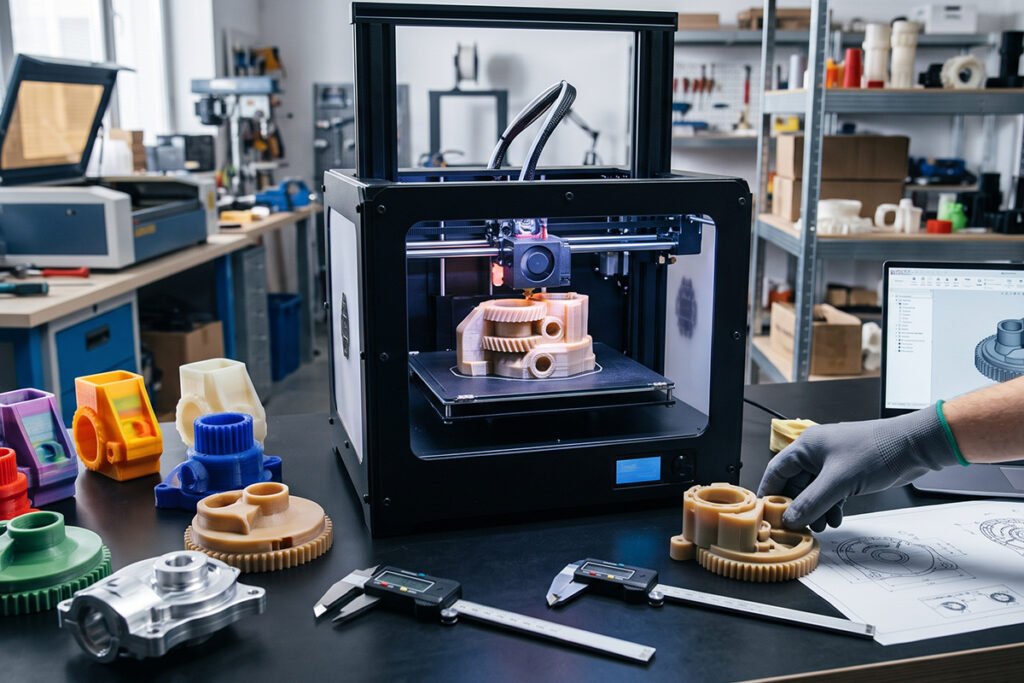
The part is measured using a combination of coordinate measuring machine (CMM) inspection, precision hand metrology (micrometers, bore gauges, thread gauges, profile projectors) and, for complex or organic shapes, 3D scanning. A broken part is still valuable: mating components, wear patterns and fractured surfaces all carry information.
2. Identify the material
Visual inspection, hardness testing and, where necessary, positive material identification (PMI) with an XRF analyser establish the alloy family and grade. For critical service, a sample can be sent for full chemical analysis. The material is then specified to a recognised standard (ASTM, EN, DIN) rather than a trade name.
3. Reconstruct the design intent
This is where experience matters most. A measured dimension of 49.97 mm on a worn shaft was almost certainly designed as 50.00 mm h6. Threads are identified as metric, UN, BSP, or NPT and matched to standards. Fits, clearances, and surface finishes are inferred from function and from the mating parts. Wear is removed from the model, not reproduced.
4. Model and draw
A parametric 3D CAD model is built, and a 2D drawing with geometric dimensioning and tolerancing (GD&T), material, heat treatment and finish is produced. The customer reviews and approves this before any metal is cut. From this point, the part is documented forever; the next replacement is a straightforward re-order.
5. Manufacture
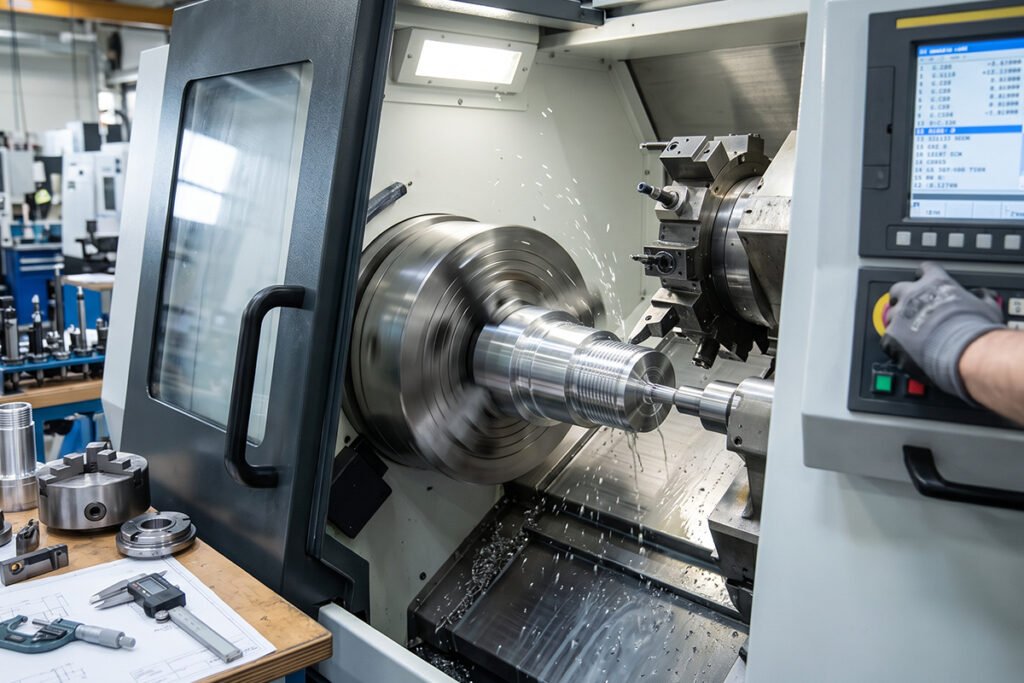
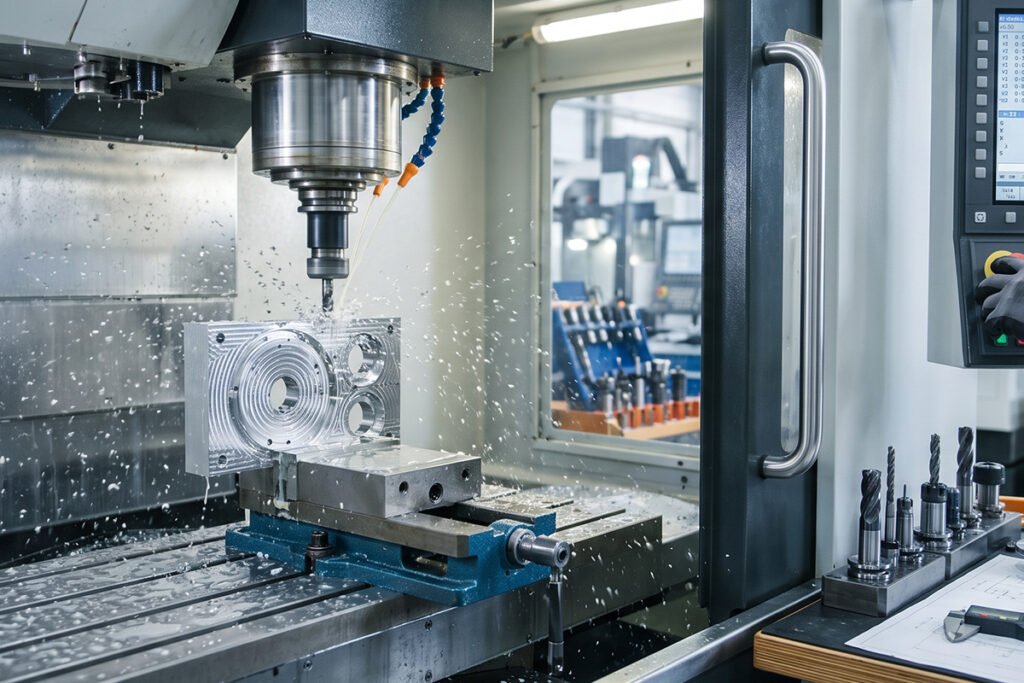
Depending on geometry and quantity: CNC milling, CNC turning, wire EDM, laser cutting, grinding, or fabrication, followed by heat treatment, plating, or coating as specified. See our custom machined parts service.
6. Inspect and certify
The finished part is inspected against the drawing, with a dimensional report and material test certificate (MTC) issued. For oil and gas work, inspection and traceability follow the requirements of our ISO 9001 and API Q1 quality systems.
What it costs and how long it takes
Two cost elements: the engineering (measurement, modelling, drawing) and the manufacturing.
- Engineering: from a few hundred dirhams for a simple turned component such as a bushing or shaft, to several thousand for a complex housing, impeller or gear. This is a one-off; repeat orders carry no engineering charge.
- Manufacturing: priced like any machined part, driven by material, size, complexity, tolerance, and quantity.
- Lead time: typically 1–3 weeks for engineering plus manufacturing on standard materials, faster for emergencies. Exotic alloys and heat treatment add time.
For a single legacy spare, reverse engineering plus machining is routinely 30–70% cheaper than the OEM price, when an OEM price exists at all. Against replacing an entire machine, the saving is usually an order of magnitude.
Common parts we reverse engineer
- Pump shafts, sleeves, wear rings, impellers and casings
- Valve stems, seats, discs and bonnets
- Gearbox shafts, gears and couplings
- Compressor pistons, rods and valve plates
- Bushings, bearing housings and spacers
- Hydraulic manifolds and cylinder components
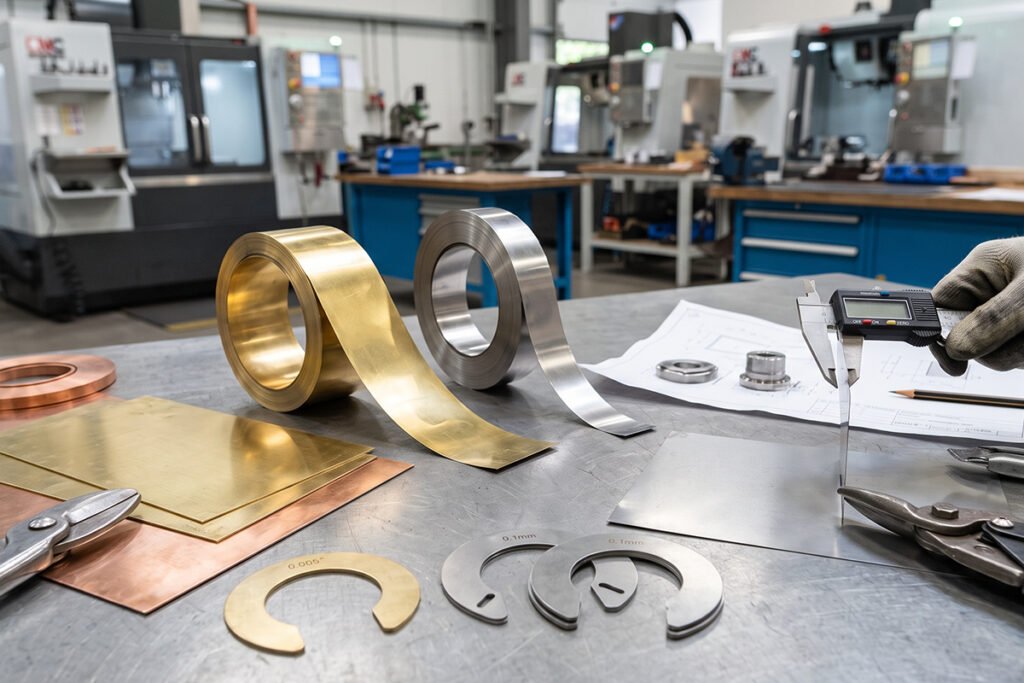
- Custom gaskets and shims profiled from a worn sample
- Machine-tool and packaging-line change parts
Improving on the original
Because the part is re-specified from scratch, upgrades are simple:
- Material: replacing carbon steel with 316L or duplex stainless for corrosive service; bronze with a self-lubricating alloy; a mild steel shaft with 17-4PH for fatigue strength.
- Coatings: hard chrome, tungsten carbide HVOF, or nitriding on wear surfaces.
- Geometry: adding a radius where a sharp corner caused cracking, or a tighter fit where vibration loosened an assembly.
Any change is agreed with you before manufacture and documented on the drawing.
What to send us for a quote
- The part itself, even if worn or broken, plus any mating parts if possible
- Whatever documentation exists: an old drawing, an OEM part number, a manual page
- The application: what the part does, operating temperature, pressure, fluid or environment
- Quantity now and expected annual usage
- The urgency
With the sample in hand, we can usually confirm feasibility within a day and quote engineering plus manufacturing within two. If you also need field equipment that cannot be locally made, our oil and gas equipment sourcing team works alongside the machine shop.
Request a reverse engineering quote or send photos of the part and a description to
menasales@genesis-mfg.com.
FAQ
Can you reverse engineer a part from a broken sample?
Usually, yes. Fractured surfaces, mating components, and wear patterns allow the original geometry to be reconstructed; the missing material is modelled rather than copied.
Is reverse engineering a part legal?
Manufacturing a replacement part for your own equipment is standard industrial practice. Restrictions apply where an active patent protects a part or where certification is legally required; we advise if either applies.
How accurate is a reverse-engineered part?
As accurate as the original design intent. Measurements are made with CMM and precision metrology, and tolerances are restored to standard fits rather than copied from a worn part.
Do I get the drawings?
Yes. The CAD model and drawings are delivered with the part so that future replacements can be re-ordered or made elsewhere.
How fast can you turn around an emergency part?
Simple components can be measured, modelled, and machined in days. Tell us the urgency when you send the sample.
Can you match the original material?
Yes, through hardness testing and PMI analysis, and we will suggest an upgrade if the original material was the reason for failure.